
Review: Soichi Terada at Fidelity
There’s a particular kind of anticipation reserved for nights like this, when an artist whose reputation has travelled mostly through word-of-mouth, reissues, and DJ folklore finally lands in a room built for closeness. At Fidelity, that sense of expectation hung low and steady, the kind that doesn’t need spectacle to announce itself. By the time Soichi Terada stepped up, the floor was already locked in: a crowd equal parts curious and committed, ready to meet a sound that’s spent decades quietly shaping dance music from the edges.
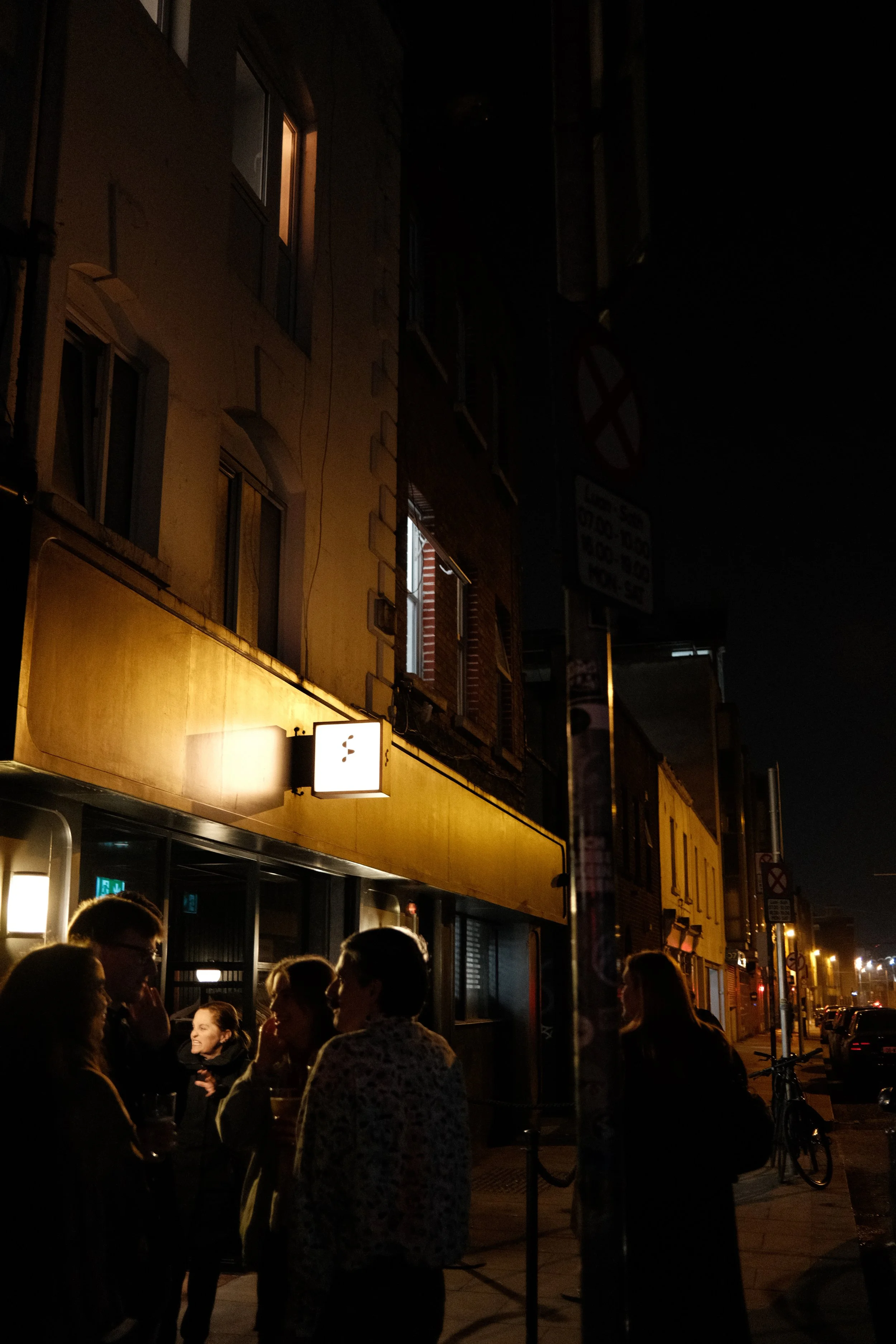
Photo by Mason Scallan
Born in Tokyo in 1965, Terada emerged at the point where house music was beginning to move beyond its roots in Chicago and New York City. A formative trip to the US set the direction early, on returning to Japan, he began teaching himself production on samplers and drum machines, chasing the loose, soulful swing he’d heard overseas. In 1989, he co-founded the label Far East Recording with Shinichiro Yokota, helping shape a distinctly Japanese take on house music. Tracks like “Sun Shower,” later remixed by Larry Levan, paired bright, playful melodies with deep, rolling grooves, a balance that still defines his sound.
Through the 1990s, he built a steady catalogue while also composing for television and video games, including Ape Escape. Much of that work remained under the radar outside Japan, circulating mainly among dedicated DJs and collectors. It wasn’t until the mid-2010s, with reissues like Sounds From the Far East, that his music found a wider global audience. What once felt niche was suddenly reframed as timeless; melodic, warm, and quietly distinctive in a genre that often leans toward severity.
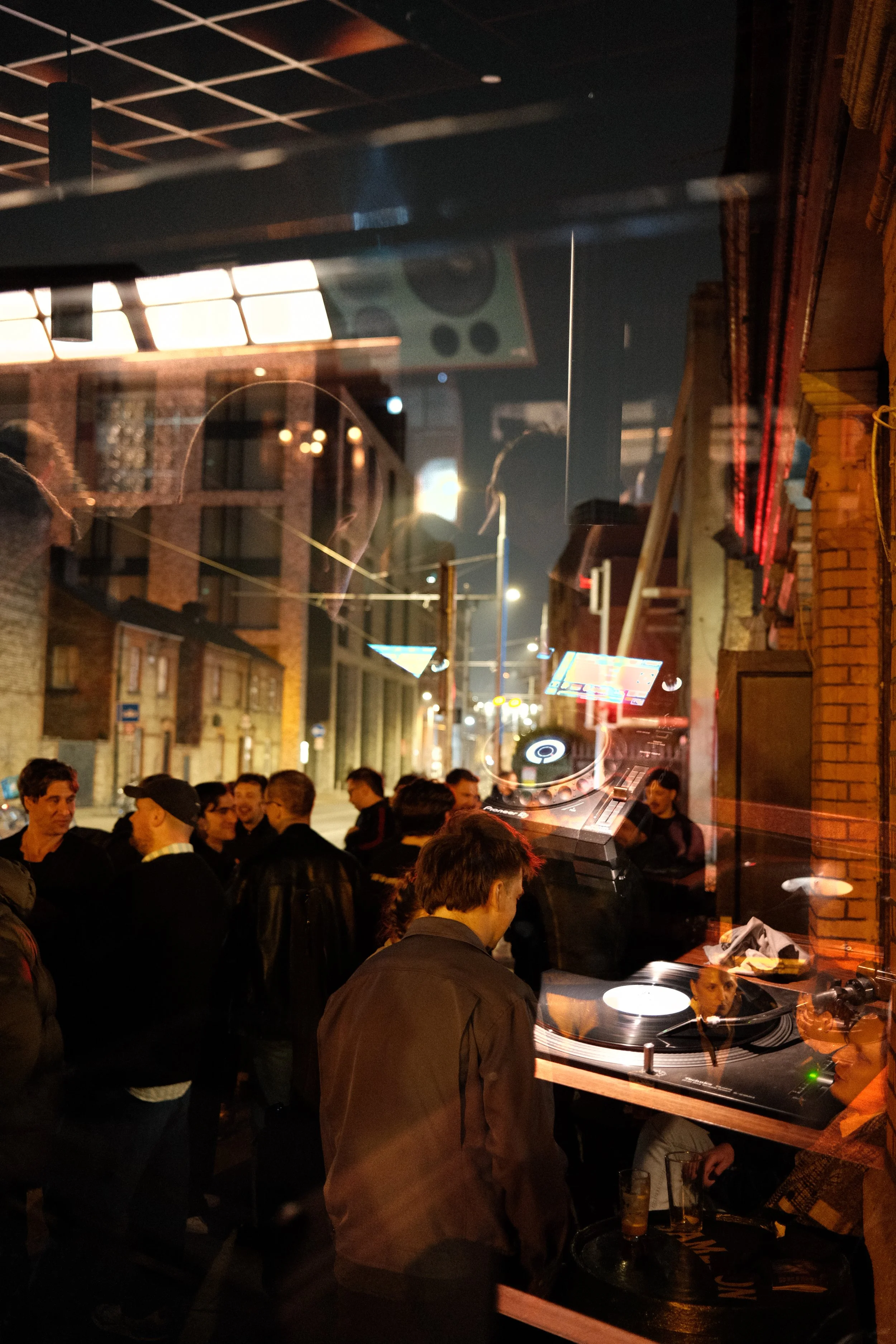
Photo by Mason Scallan
Before his set took off, the crowd was treated to a carefully built and genuinely engaging warm-up from Emmy Shigeta and Shrem. Rather than rushing toward peak-time energy, they leaned into groove and texture gradually pulling the room together. It felt intentional: a set designed less to impress in isolation and more to shape the space, giving people time to settle, adjust, and lock into the system. By the midpoint, the floor had filled out noticeably, the crowd moving in sync with a sound that favoured patience over payoff. It set a tone that made sense for what was to follow; warm, open, and grounded in rhythm rather than spectacle.
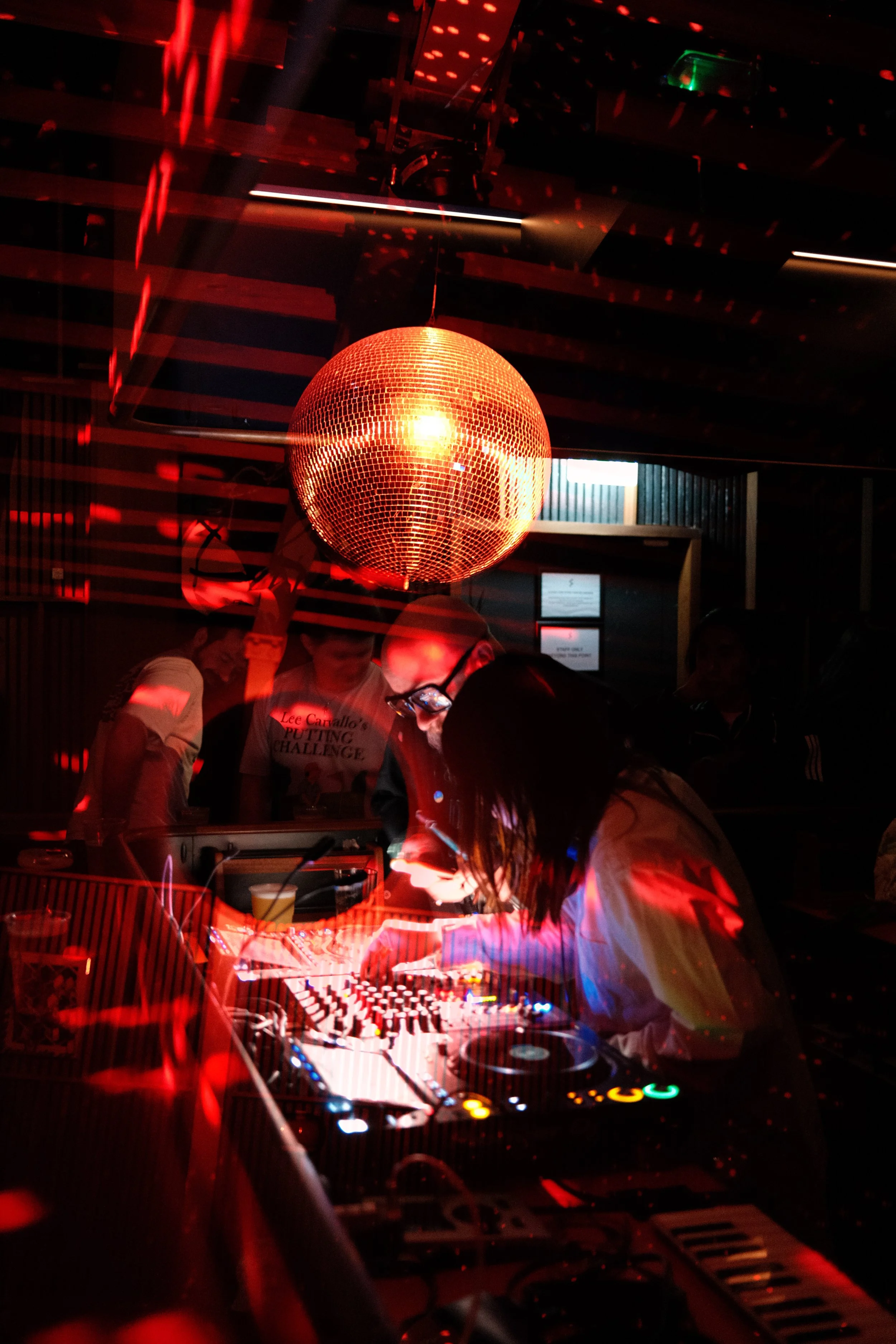
Emmy Shigeta by Mason Scallan
That sense of timelessness carried into Terada’s set itself. He didn’t rush it. The opening stretch leaned into groove over immediacy, soft, rolling drums, warm pads, and those unmistakable melodic lines that feel almost simple until they fully land on a big system. In a room like Fidelity, that patience made sense. The crowd followed, settling into the rhythm rather than pushing for an early peak.
As things opened up, the character of Terada’s catalogue came into sharper focus. Bright basslines and glassy synths cut through with a kind of emotional clarity that felt both light and precise. When familiar elements surfaced they landed as moments of recognition rather than release. The reaction stayed consistent: locked into the groove, the energy sustained rather than spiking.
What stood out most was the pacing. Terada let tracks breathe, allowing transitions to stretch and overlap until the set took on a fluid, almost hypnotic quality. All accompanied by his dance moves that the crowd followed and his “guest singer”, his origami artwork. Even as the energy lifted, it never tipped into aggression. Instead, it stayed buoyant; warm, melodic, and deeply danceable from start to finish.
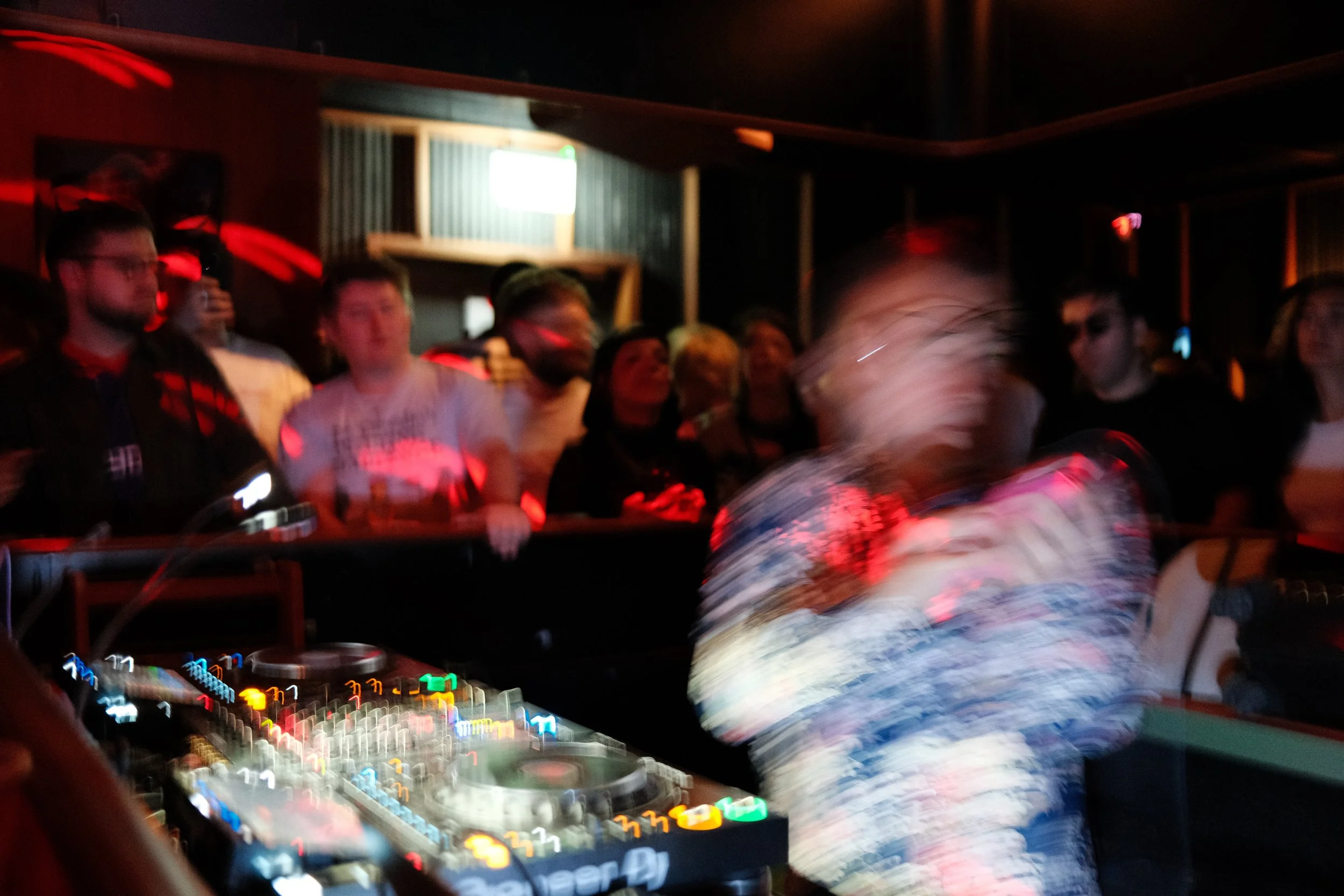
Soichi Terada by Mason Scallan
By the closing stretch, the room was fully with him. Not in a peak-time, hands-in-the-air sense, but in something more grounded, a shared trust in the groove. In a city that often leans toward harder, faster sounds, Terada’s approach felt quietly radical. A reminder that house music, at its core, doesn’t need to shout to leave an impression.